How Social Media Marketing Builds Brand Awareness: A Complete Guide
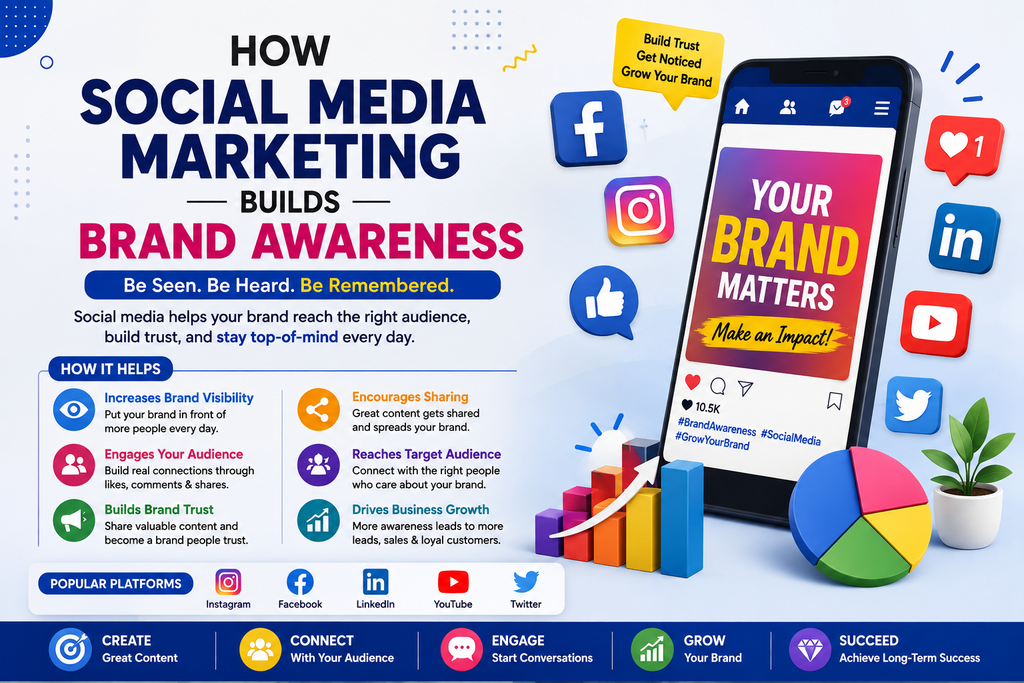
In today’s digital world, customers spend a significant amount of time on social media platforms. They use platforms such as Instagram, Facebook, LinkedIn, YouTube, and other social networks to discover brands, learn about products, and communicate with businesses. Because of this, social media marketing has become an important part of a modern digital marketing strategy.
One of the biggest benefits of social media marketing is its ability to build brand awareness. When people repeatedly see a brand, interact with its content, or hear about it from others, they can become more familiar with that brand.
In this guide, we will explain how social media marketing builds brand awareness, the benefits of social media marketing, and practical strategies businesses can use to increase their online visibility.
What Is Social Media Marketing?
Social media marketing is the process of promoting a business, product, service, or brand through social media platforms. It involves creating and sharing content to reach a target audience, increase engagement, build relationships, and achieve marketing goals.
Social media marketing can include:
- Social media posts
- Short-form videos and Reels
- Stories
- Images and graphics
- Educational content
- Customer testimonials
- Influencer collaborations
- Paid social media advertising
A good social media marketing strategy focuses not only on promoting products but also on providing valuable content and creating meaningful connections with the audience.
What Is Brand Awareness?
Brand awareness refers to how familiar customers are with a particular brand. When people can recognize or remember a business, its products, logo, services, or messaging, the brand has a stronger presence in their minds.
For example, when customers repeatedly see a business on Instagram or YouTube, they may become familiar with that business even if they do not purchase anything immediately.
Building brand awareness online is important because customers often interact with several brands before making a purchasing decision.
How Social Media Marketing Builds Brand Awareness
1. Increases Brand Visibility
Social media allows businesses to put their brand in front of a large and relevant audience.
By regularly publishing content, businesses can increase their online visibility and create more opportunities for people to discover their brand.
For example, a fashion business can share product photos, styling tips, Reels, and customer content on Instagram. When users interact with or share this content, more people may discover the brand.
Consistent visibility helps businesses remain recognizable to their target audience.
2. Helps Reach the Target Audience
One of the major advantages of social media marketing is the ability to reach a specific target audience.
Businesses can create content based on their customers’ interests, needs, age groups, locations, and other relevant characteristics.
For example, a digital marketing agency may create content for:
- Small business owners
- Entrepreneurs
- Marketing students
- Freelancers
- Startup founders
Creating content for a clearly defined audience can make social media communication more relevant and useful.
3. Creates Consistent Brand Identity
A consistent brand identity helps people recognize a business across different platforms.
Businesses can maintain consistency through:
- Brand colors
- Logo
- Typography
- Visual style
- Tone of communication
- Content themes
For example, using a consistent visual style on Instagram, Facebook, LinkedIn, and a business website can make the brand easier to recognize.
This is an important part of social media branding.
4. Encourages Customer Engagement
Social media is not just a platform for advertising. It also allows businesses to communicate directly with customers.
Businesses can interact with their audience through:
- Comments
- Direct messages
- Polls
- Questions
- Stories
- Live videos
This interaction can help businesses develop stronger relationships with their audience.
High-quality social media engagement can also encourage customers to remember and talk about a brand.
5. Helps Create Shareable Content
Shareable content can help a business reach people beyond its existing followers.
Useful and engaging content may include:
- Educational posts
- Helpful tips
- Infographics
- Short videos
- Industry insights
- Entertaining content
- Inspirational posts
When users share content with friends or followers, the brand can gain additional exposure.
This can support organic brand awareness without relying entirely on paid advertising.
6. Uses Video Marketing to Increase Reach
Video has become an important part of social media content.
Businesses can use:
- Instagram Reels
- YouTube videos
- Short-form videos
- Tutorials
- Product demonstrations
- Behind-the-scenes videos
Video content can communicate information quickly and provide a more engaging way to introduce a brand.
For example, a skincare business can create short videos showing product usage, skincare tips, and customer experiences.
7. Builds Trust Through Valuable Content
People are more likely to pay attention to businesses that consistently provide useful information.
Content marketing and social media marketing can work together to build trust and authority.
A business can share:
- How-to guides
- Industry tips
- FAQs
- Tutorials
- Educational videos
- Customer success stories
Instead of only saying “buy our product,” businesses can help their audience understand problems and discover useful solutions.
This approach can strengthen brand credibility over time.
8. Supports Influencer Marketing
Influencer marketing can help businesses introduce their brands to established online communities.
Businesses can collaborate with relevant influencers or content creators who have an audience that matches their target market.
For example, a beauty brand may work with a beauty creator to demonstrate a product.
The goal should be to choose creators whose audience and content are relevant to the brand rather than focusing only on follower numbers.
9. Uses Paid Social Media Advertising
Organic social media content is not the only way to build brand awareness. Businesses can also use social media advertising.
Platforms offer advertising options that can help businesses reach selected audiences.
Paid campaigns can be used for objectives such as:
- Brand awareness
- Website traffic
- Lead generation
- Product promotion
- Engagement
- Conversions
Businesses should track advertising performance and adjust campaigns according to their marketing goals.
Benefits of Social Media Marketing for Brand Awareness
A well-planned social media strategy can provide several benefits:
- Increased brand visibility
- Greater audience reach
- Better customer engagement
- Stronger brand recognition
- Improved online presence
- More website traffic
- Opportunities for lead generation
- Stronger customer relationships
- Better communication with customers
However, results can vary depending on the industry, audience, content quality, consistency, and marketing strategy.
How to Create a Social Media Strategy for Brand Awareness
Businesses can follow these simple steps:
Step 1: Define Your Target Audience
Understand who your ideal customers are and what type of content they find useful.
Step 2: Choose the Right Platforms
You do not need to be active on every social network. Choose platforms where your target audience is most relevant.
Step 3: Create Valuable Content
Develop a mixture of educational, entertaining, informative, and promotional content.
Step 4: Maintain Consistency
Post regularly and maintain a consistent brand identity.
Step 5: Engage With Your Audience
Reply to comments and messages and encourage conversations.
Step 6: Measure Your Performance
Track metrics such as reach, impressions, engagement, followers, website traffic, and conversions.
Conclusion
Social media marketing builds brand awareness by increasing visibility, reaching targeted audiences, encouraging engagement, and creating opportunities for people to discover and remember a brand.
Businesses can use social media platforms, content marketing, video marketing, influencer marketing, and paid advertising to strengthen their online presence. However, successful social media branding requires more than simply posting content. Businesses need a clear strategy, consistent communication, valuable content, and regular performance analysis.
For small businesses and growing brands, social media can be an effective part of a broader digital marketing strategy. By understanding their audience and consistently delivering useful content, businesses can gradually build stronger brand recognition and meaningful customer relationships.