How Email Marketing Helps Businesses Build Customer Relationships
In today’s digital world, building strong customer relationships is just as important as attracting new customers. People have many choices when it comes to products and services, so businesses need to communicate with their customers regularly and provide value. This is where email marketing becomes an important part of a digital marketing strategy.
Email marketing allows businesses to communicate directly with their audience through personalized messages, newsletters, product updates, educational content, and special offers. When used correctly, it can help businesses stay connected with customers and develop long-term relationships.
In this guide, we will explain how email marketing helps businesses build customer relationships, the benefits of email marketing, different types of email campaigns, personalization techniques, and useful strategies for beginners.
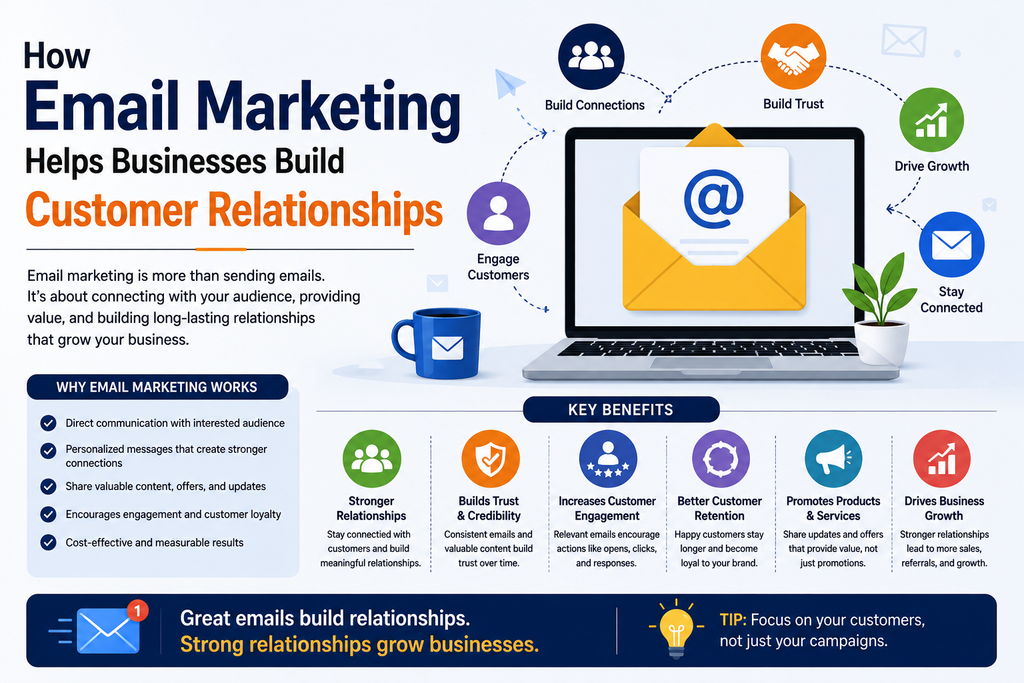
What Is Email Marketing?
Email marketing is a digital marketing method that involves sending emails to a group of subscribers or customers to communicate information, provide value, promote products or services, and maintain relationships.
Businesses can use email marketing for different purposes, such as:
- Sharing newsletters
- Sending product updates
- Promoting special offers
- Welcoming new subscribers
- Educating customers
- Sending personalized recommendations
- Collecting customer feedback
- Maintaining customer engagement
Unlike some digital advertising methods, email marketing gives businesses a direct communication channel with people who have chosen to receive their messages.
Why Is Email Marketing Important for Customer Relationships?
Customer relationships develop over time. A customer may first discover a business through Google, social media, advertising, or a recommendation. However, regular and useful communication can help keep the business connected with that customer.
Email marketing for customer relationships allows businesses to stay in touch after the first interaction.
For example, an online clothing store can send customers:
- New collection announcements
- Styling tips
- Personalized product suggestions
- Seasonal offers
- Order updates
- Helpful fashion content
This type of communication can make customers feel connected to the brand instead of receiving only promotional advertisements.
1. Helps Businesses Communicate Regularly
Consistent communication is one of the most important parts of building customer relationships.
Businesses can use an email newsletter to share useful information with subscribers on a regular basis.
For example, a digital marketing agency could send a weekly newsletter containing:
- SEO tips
- Social media updates
- Content marketing ideas
- Digital marketing trends
- Useful tools
Regular communication helps a brand remain familiar to its audience.
However, businesses should avoid sending emails too frequently or sending irrelevant content because this can lead to unsubscribes.
2. Builds Customer Trust
Trust is an important part of a long-term customer relationship.
Businesses can use email content to demonstrate their knowledge and provide useful information instead of focusing only on sales.
For example, a skincare brand could send an email explaining how to create a basic skincare routine. The email provides value while also introducing relevant products.
This approach can support customer trust and brand credibility.
When customers consistently receive useful and relevant information, they may become more familiar with the brand.
3. Personalizes Customer Communication
One major advantage of modern email marketing is email personalization.
Instead of sending exactly the same message to everyone, businesses can customize communication based on customer information and behavior.
For example, an e-commerce business could recommend products based on:
- Previous purchases
- Browsing activity
- Product interests
- Location
- Customer preferences
Personalized emails can make communication more relevant to individual customers.
Even simple personalization, such as using a subscriber’s name or recommending products related to their interests, can make an email feel more personal.
4. Helps Businesses Understand Customers
Email marketing is not only useful for sending information. It can also help businesses understand their audience.
Businesses can analyze customer interactions such as:
- Email opens
- Link clicks
- Purchases
- Unsubscribes
- Responses
- Survey results
These insights can help marketers understand what types of content customers find interesting.
For example, if many subscribers click on SEO-related articles, a digital marketing website may create more SEO content for its email audience.
5. Encourages Customer Engagement
Customer engagement means how actively customers interact with a business or brand.
Email marketing can encourage engagement through:
- Questions
- Surveys
- Polls
- Special content
- Product recommendations
- Feedback requests
- Interactive links
Instead of sending emails that only promote products, businesses can encourage customers to participate in conversations.
This can help create a stronger connection between the brand and its audience.
6. Supports Customer Retention
Getting a new customer can require significant marketing effort. Maintaining relationships with existing customers can help businesses encourage repeat interactions.
Customer retention refers to a business’s ability to keep customers over time.
Email campaigns can support retention by sending:
- Thank-you emails
- Loyalty rewards
- Personalized recommendations
- Helpful tips
- New product announcements
- Exclusive offers
For example, a coffee brand might send existing customers a loyalty reward after several purchases.
These communications can encourage customers to return to the business.
7. Provides Value Beyond Promotions
A common mistake in email marketing is sending promotional messages all the time.
Customers may lose interest if every email simply says, “Buy now.”
Instead, businesses should create a balance between promotional and educational content.
Useful email content can include:
- How-to guides
- Industry tips
- Tutorials
- Checklists
- Educational articles
- Customer stories
- Helpful resources
This is known as value-driven email marketing.
Providing value can help businesses maintain long-term relationships rather than focusing only on immediate sales.
8. Uses Automated Email Marketing
Email automation allows businesses to send specific emails automatically when certain actions occur.
Common automated emails include:
Welcome Emails
Sent when someone subscribes to an email list.
Abandoned Cart Emails
Sent when a customer adds products to their shopping cart but does not complete the purchase.
Birthday Emails
Sent to customers around their birthday when the business has permission and relevant information.
Post-Purchase Emails
Sent after a customer makes a purchase to provide information, support, or recommendations.
Re-Engagement Emails
Sent to inactive subscribers to encourage them to interact with the brand again.
Automation helps businesses communicate with customers at relevant moments without manually sending every message.
9. Builds Brand Loyalty
Consistent communication, personalization, and valuable content can contribute to brand loyalty.
When customers have positive experiences with a business and regularly receive relevant communication, they may develop a stronger connection with the brand.
Businesses can support loyalty through:
- Exclusive content
- Loyalty programs
- Special discounts
- Early product access
- Personalized recommendations
- Thank-you messages
The goal should be to make customers feel valued rather than simply treating them as sales opportunities.
10. Supports Two-Way Communication
Email does not have to be a one-way communication channel.
Businesses can invite customers to reply to emails, complete surveys, provide feedback, or ask questions.
For example:
“What type of digital marketing topic would you like us to cover next?”
This simple question can encourage customers to share their opinions.
Customer feedback can then help businesses improve their products, services, and future marketing campaigns.
Types of Email Marketing Campaigns
Businesses can use different types of email marketing campaigns, including:
- Welcome email campaigns
- Newsletter campaigns
- Promotional email campaigns
- Product announcement emails
- Educational email campaigns
- Customer feedback emails
- Abandoned cart emails
- Re-engagement campaigns
- Loyalty emails
The right type of campaign depends on the business, audience, and marketing objective.
Best Practices for Building Customer Relationships Through Email
To make email marketing more effective, businesses should follow some basic practices.
Create a Quality Email List
Build an email list using permission-based methods. Avoid purchasing random email lists.
Write Useful Subject Lines
The subject line should clearly communicate what the email is about without misleading the reader.
Provide Valuable Content
Give subscribers information that is useful, relevant, and easy to understand.
Personalize When Appropriate
Use customer information and behavior to make messages more relevant.
Make Emails Mobile-Friendly
Many people read emails on smartphones, so emails should display properly on smaller screens.
Include a Clear Call to Action
Tell the reader what action they can take, such as:
- Read the article
- Shop now
- Learn more
- Download the guide
- Contact us
Measure Performance
Track metrics such as:
- Open rate
- Click-through rate
- Conversion rate
- Unsubscribe rate
- Email revenue
- Engagement
These metrics can help marketers understand how their campaigns are performing.
Conclusion
Email marketing helps businesses build customer relationships by providing a direct way to communicate with customers and subscribers. Through regular communication, personalization, valuable content, automation, and customer feedback, businesses can create stronger connections with their audience.
A successful email marketing strategy is not simply about sending promotional messages. It is about understanding customers, providing useful information, and communicating at the right time.
Whether you run an e-commerce store, service business, startup, or digital marketing agency, email marketing can become an important part of your overall digital marketing strategy.
By creating relevant content, respecting customer preferences, and consistently providing value, businesses can use email marketing to support customer engagement, retention, trust, and long-term relationships.
🔑 SEO Details
Primary Keyword: